What is Civic Tech?
Understand civic technology, where it came from, and how it can serve communities.In October 2012, DC residents gathered for the first meeting of Code for DC, the local Code for America brigade. People came ready to build solutions, but cofounder Justin Grimes opened with a question instead: “Do you engage civically?”
The question mattered because building something useful for a community starts with understanding how civic life works. Knowing who represents your neighborhood, how local decisions are made, and where people struggle to participate helps you identify problems worth working on.
Most of the room couldn’t say which ward they lived in, let alone identify their Advisory Neighborhood Commission (ANC), one of D.C.’s neighborhood bodies of local government. With that, Grimes led a team to build ANC Finder, a simple tool that tells you which ANC you are part of and how to contact your representative. It was later recommended on the DC Board of Ethics and Government Accountability website.
That experience still informs Civic Tech DC today. We start by understanding a civic problem and working with the people affected by it, then consider how technology can help. ANC Finder is an early example of that approach: a question about participation led to a practical tool that helped neighbors connect with their local representatives.
Civic Tech 101
Section titled “Civic Tech 101”Civic tech is a broad field, and even if you couldn’t define it, you’ve probably run into it somewhere. If you’ve looked up your trash pickup day online, tracked a bill through Congress, or used a map to find your local grocery store, you’ve touched it.
The term is made up of two parts, civics (the ways people come together to shape their communities) and technology, and neither works without the other. The movement is expansive, with many fields and approaches spinning off from it, including govtech, digital democracy, and campaign tech. Different organizations and individuals have defined it in ways that overlap but emphasize different parts of the field and the problems they want to solve. A few prominent voices describe it as:
- “Use of digital tools and platforms that help people engage with governments and public institutions in more open, inclusive, and meaningful ways.” United Nations Development Programme
- “The use of newly available possibilities for the common good.” Civic Tech Field Guide
Here at Civic Tech DC, we define civic tech as:
People using technology to strengthen civic life.
For us, this definition starts with people and civic problems. We focus first on the processes and systems that shape civic life through human-centered design and then consider where technology can help. The volunteer projects we build are designed to be:
Adaptable
to diverse community needs.
Reusable
across different communities and contexts.
Scalable
for lasting impact.
Collaborative
with people encouraged to fork, build upon, and contribute back to existing projects.
Our range of work is wide. ANC Finder was one of our earliest tools, but we’ve also built dozens of tools ranging from OurDCSchools.org built with support from the Deputy Mayor for Education (DME), to DC Crash Bots, which was featured and nominated for a 2021 Technical.ly Award. Some projects are websites and web apps, some are data analysis, and some are workshops or designed materials.
At Civic Tech DC, a project does not need to be a sophisticated app or platform. What we measure success by is whether people are using available tools and approaches to solve civic problems.
So, How Do We Engage Civically?
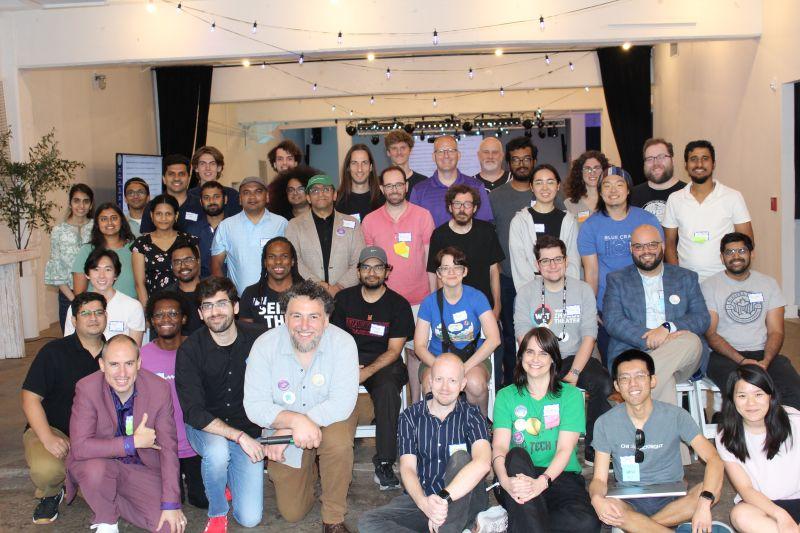
Section titled “So, How Do We Engage Civically?”The name of the organization has changed from Code for DC to Civic Tech DC since that first meeting in 2012, but the principles that drive our work have not. Everyone is welcome to our community, and you don’t need to write code to start, just a willingness to work with others on an issue you care about.
Civic Tech Resources
Section titled “Civic Tech Resources”Curious to go deeper into the field of civic tech? Explore these books and resources:
- Open Government Data by Josh Tauberer: Learn how open government data can improve transparency, accountability, and public participation.
- Civic Tech Field Guide by Matt Stempeck and contributors: Explore a global directory of civic tech projects, organizations, tools, and communities.
- Recoding America by Jennifer Pahlka: Learn why government services can fail and how better technology and public-sector practices can improve them.
- Digital.gov: Find practical guidance on digital government, accessibility, open data, and public service delivery.
- Human-Centered Design Guides: Learn how to research community needs and design services around people’s experiences.
- Code for America: Explore how technology and human-centered design can improve government services and public benefits.
- U.S. Web Design System: Learn how to build accessible, consistent, and mobile-friendly government websites.
- 18F Guides: Explore guidance on agile development, user research, and building better government digital services.
- Public Digital: Explore how digital transformation, technology, and organizational change can improve public services.