Welcome to Civic Tech DC!
Learn how Civic Tech DC works, find a project, and get started at Project Night.The best way to get involved with Civic Tech DC is to just show up!
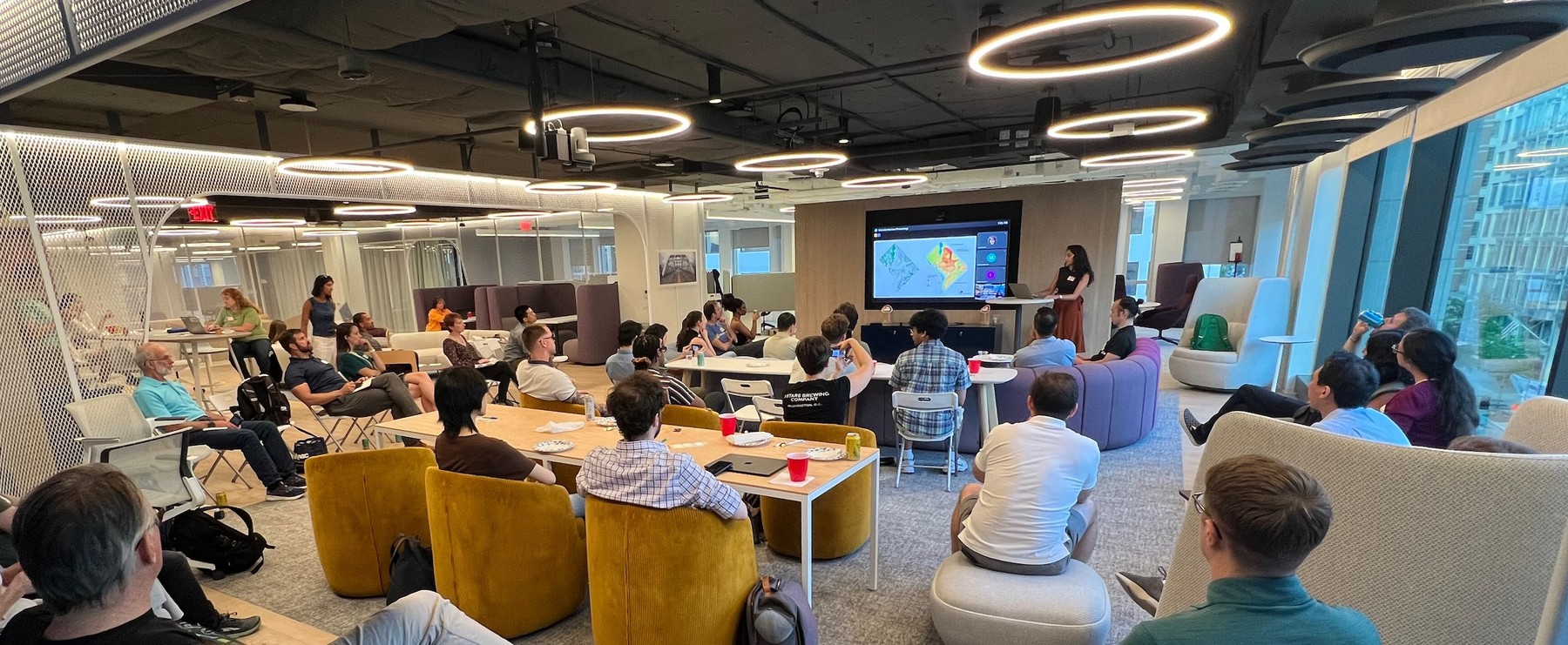
Civic Tech DC is a nonpartisan nonprofit community that brings together volunteers and community partners to build open-source technology addressing local challenges in the DC metro area and beyond. At the heart of our programming are biweekly Project Nights, held on the second and fourth Wednesdays of each month from 6:00 to 8:30 p.m. We typically have 6–7 active projects, each with a team of volunteers working to address a real civic problem.
Everyone is welcome. You don’t need to be a developer, have a technical background, or know exactly what you want to work on. Many people come to their first Project Night simply because they’re curious about civic technology and want to meet people doing the work.
What is a Project?
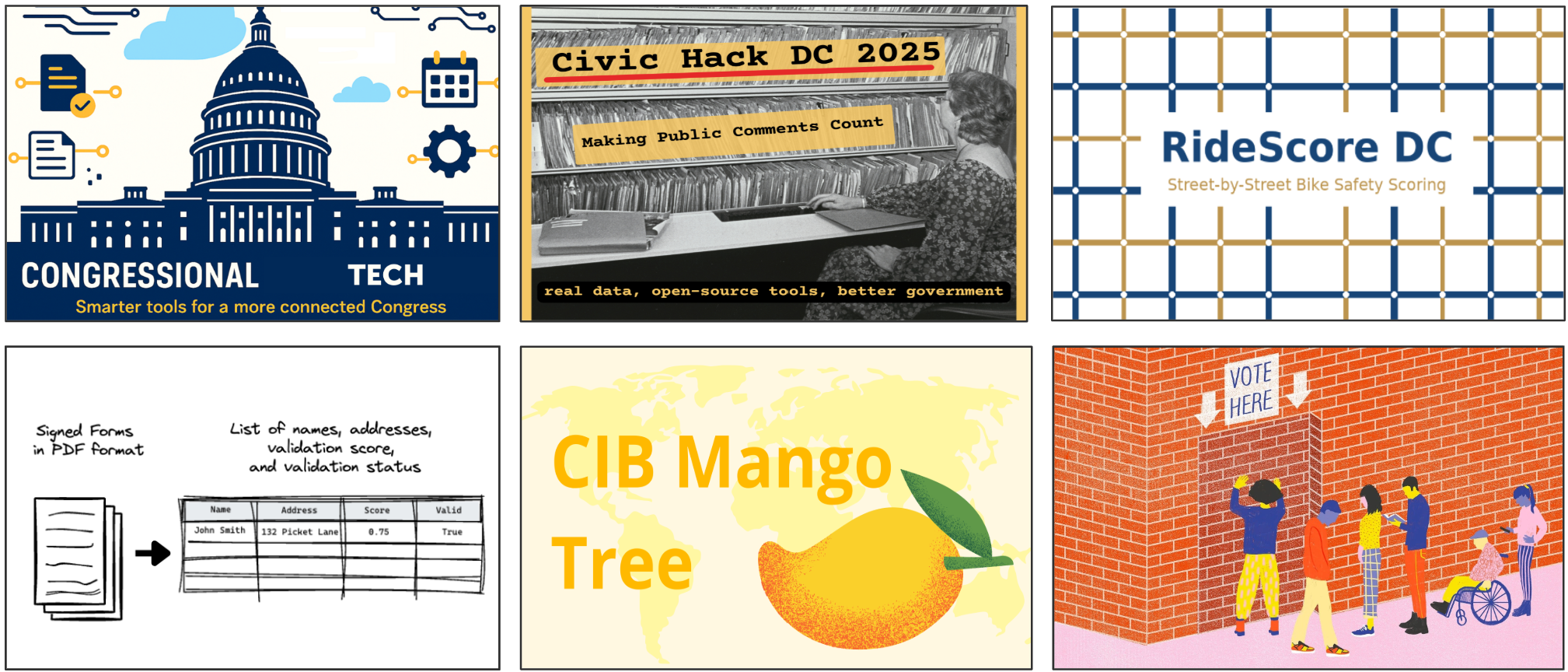
Section titled “What is a Project?”A project is a service, tool, or process that uses technology to address a local community need. All of our projects are rooted in a real problem experienced by a community and are developed in partnership with a validated partner who helps us understand the problem and determine whether what we’re building is actually useful.
A project can use and apply technology in many different ways, ranging from websites to data visualization maps, research tools, etc. Each project focuses on understanding:
- Problem: What community need or problem are we trying to address?
- People: Who is affected by the problem and who are our community partners?
- Technology: What tools are we using?
- Process: How do we self-organize and make decisions?
- Impact: How do we know whether we’re making a difference?
We’re always incubating new projects and iterating on existing ones. You can explore the full list of active projects here.
Ready to jump into a project? The best way is to join us at one of our project nights!
Your First Project Night
Section titled “Your First Project Night”Ready to join your first project night? A new community event can feel a little intimidating, but we are friendly folks! Here is the typical run of show.
| Time | Activity | What to Expect |
|---|---|---|
| 6:00–6:30 PM | Arrival | Doors open! Grab food, meet the organizers (usually near the front), and introduce yourself to new folks. |
| 6:30–6:45 PM | Welcome | Civic Tech DC organizers share announcements, followed by project pitches from project leads. |
| 6:45–7:00 PM | New Contributor Orientation | Learn about Civic Tech DC, explore ways to get involved, and find a project that fits your interests and skills. This is your time to ask questions. |
| 7:00–8:15 PM | Project Work | This is the heart of the evening! Explore a project and get specialized onboarding from the project lead on team needs, roles, and ways to contribute. |
| 8:15–8:30 PM | Regroup | Everyone comes back together for a quick wrap-up where each project shares what they worked on. No achievement is too small, whether it’s shipping a PR or finishing a research interview. |
| 8:30–9:00 PM | Optional Happy Hour | Want to keep talking? Join us at a nearby bar to unwind and get to know the community. This is optional, but a great way to end the night. |
A. Choosing a Project
Section titled “A. Choosing a Project”On your first night, feel free to explore multiple projects. Every project operates a little differently, so get a feel for how they run and if they match your interests and skills! You also don’t have to stick with the first project you join. Here are a few things to think about when choosing a project:
- The Problem: Does the community need or challenge the project is addressing interest you? You don’t need to understand the technology yet; start first with the problem the team is trying to solve.
- The People: Do the team’s interests, working style, and approach appeal to you?
- Work Involved: What does the project need help with right now? Projects need more than software developers. Depending on the team’s needs, you might contribute through design, research, writing, outreach, data analysis, or project coordination.
- Stage of the Project: Is the team exploring an early idea, building something new, or maintaining an existing tool? Different stages offer different opportunities to contribute.
- Your Time: How much time can you realistically commit, and what would you like to learn or practice? Look for a role that fits your current bandwidth while giving you room to grow.
Not sure how you could contribute? Projects need more than software developers, and every team has different needs. Depending on the project, you might help with design, research, writing, outreach, data analysis, or project coordination. These aren’t formal roles that every project needs, but a starting point for finding where you might fit.
B. Joining a Project
Section titled “B. Joining a Project”If you find a project you’re interested in, talk to the project lead or another member of the team to share your interest. They can explain what the team is working on and help you find a place to start.
Each team has its own way of working. Your project lead can explain which tools you’ll use for your contribution.
-
Slack: Teams use Slack to stay connected between Project Nights, share updates, and coordinate work. The community also posts announcements there. If you’re new to Slack, here’s the official guide.
-
GitHub: Projects keep their code under the Civic Tech DC GitHub organization. How much you use GitHub depends on your role; you don’t need an account for every type of contribution. If your work requires one, you can create an account and ask your project lead for access.
-
Project Documentation: Projects may maintain documentation in different places, including GitHub, shared documents, project websites, or other tools. Your project lead can point you toward the resources you need.
Community expectations: Civic Tech DC is committed to creating a welcoming community. Our code of conduct describes the behavior we expect from community members and how concerns can be reported.
If you have a concern, please come talk to our team. Or if you want to be anonymous, you can fill out this form, and we will take the next best steps.